The other method makes the joins where two of the color blocks meet, and is done by linking one yarn around the other as with flat intarsia, but with some changes because the yarn to wrap around isn't on the correct side yet. It has the disadvantage of having a slightly higher potential for getting tangled up in your work, and the advantage of being quite seamless; I definitely prefer this method. We'll continue using our smiley-face hat example; we'll need one strand each of yellow and blue, because in a seamless hat, there is one section of each color. On the first row which contains the motif, you will work with the blue strand to the right edge of the motif, then twist the yarns as usual and work the motif with the yellow strand. Now, having reached the left edge of the motif, you need to wrap the yellow yarn and blue yarn together, but the blue yarn is still back over on the right edge. What you're going to do is bring the blue yarn all the way around counterclockwise in a very long strand, and lay it over the yellow yarn; don't worry about the length of this very long strand, because we're going to take care of it in a minute. Once you've laid the blue yarn over the yellow, work counterclockwise with the yellow until you're back on the right edge of the motif. Drop the yellow strand inside the loop of blue yarn that you created in the previous step, and then use that blue strand to continue working counterclockwise through the entire blue section; pull out slack from where the end of the strand is caught by the yellow as needed. When you've completed the blue section and are at the left edge of the yellow motif, pull the blue strand taut, so there's no more slack in it and it's snug up against the yellow section. At this point, the blue strand is at the left edge of the motif, and the yellow strand is at the right edge. Draw the yellow strand loosely across the back of the yellow section, and lay it over the blue strand, and then work clockwise with the blue strand until you're back to the right edge of the motif. Drop the blue strand through the loop of yellow, work the yellow stitches clockwise, and then pull the yellow strand taut. As you can see, you're essentially working flat, with the turning point at the left edge of the motif (a brief note: if you have more than one motif, as when you put a design on the front and another design on the back of an item, the join point will end up at the left edge of the last-worked motif), but the left edge of the motif and the right edge of the background section are being linked together in exactly the same way that the other edges are; this gives you an effectively seamless tube. At the top of the motif, if the last row of the motif was counterclockwise, the yellow yarn will be at the right edge; do not draw it across the back, but simply do a YO with the blue yarn and resume working clockwise in rounds, using SSK to work that YO together with the stitch before it on the next round. If the last row of the motif was clockwise, slip the motif stitches in the counterclockwise direction to get back to the right edge of the motif, and then simply pick up the blue strand and resume working clockwise in rounds.
Tuesday, December 29, 2009
Seamless Intarsia
From Let Me Explaiknit.

Sunday, December 27, 2009


Monday, November 30, 2009

Tuesday, November 17, 2009


Wednesday, November 11, 2009
Gaufres de Liege
What
How at The Kitchn:
Pearl Sugar
What
How
Where
How at The Kitchn:
Gaufres de Liege
makes 12 waffles
6 tablespoons warm milk (no hotter than 110°F)
1/2 teaspoons granulated sugar
2 teaspoons instant yeast
1 1/2 cups (230 grams) bread flour, sifted
1 teaspoons cinnamon
2 teaspoons vanilla extract
1/2 teaspoons salt
1 medium egg
1 egg yolk
1/2 cup (4 oz) unsalted butter, at slightly cooler than room temperature
140 grams turbinado sugar, or pearl sugar if you choose
Cooking spray
Dissolve the sugar in the warm milk; then add the yeast. Make sure that the milk is not too hot, lest it kill the yeast instead of promoting its growth. Place a plate or some kind of cover on top of the bowl with the milk, sugar and yeast. Set aside for about five minutes. When you check on it, the yeast should have bubbled up, looking light brown and spongy.
Meanwhile, mix the sifted bread flour with the cinnamon, vanilla extract, and salt in the bowl of a stand mixer. Pour in the yeast mixture; then add the whole egg and egg yolk. Mix on medium speed until it is fully combined. The dough will be yellow and stiff, yielding only slightly to a poke.
Cover the mixing bowl with plastic wrap and let the dough rest in a warm place for about thirty minutes.
Beat in the butter piece by piece; you do not have to wait for the prior piece to be fully incorporated before adding the next. When the dough has incorporated about half of the butter, the mixture will be like a very thick, somewhat broken-up paste. If you keep engaging the mixer on medium-high speed, the dough will eventually become a cohesive whole, looking smoother and more feeling more elastic. Scrape the sides of the bowl if needed.
Kneading very gently, incorporate the sugar crystals just enough to get them evenly distributed. Work quickly so as not to soften the buttery dough too much.
Divide the dough into a dozen equal pieces, gently forming them into balls.
Place the balls of dough on a cutting board in a warmish place for fifteen minutes or so. During the last two minutes of this resting time, preheat your waffle iron until it is very warm, but not hot.
Spray the griddles with cooking oil. Place each ball of dough in a whole square or section of the waffle iron. Like regular waffle batter, the dough will start to puff up. Cook the waffles until the surface is golden to dark brown. Be sure that the waffle iron you are using is appropriately deep, or else the interior of the waffle will not be cooked through. If you are using a vintage stovetop waffle iron, flip the iron every thirty to forty seconds, lifting the iron to check the rate of browning. The browning should be gradual to allow the interior to fully develop.
Set the waffles on a cooling rack as they come out of the iron to promote a crispy exterior. Serve immediately with a sprinkling of powdered sugar.
Any leftover waffles, if they are not dark brown, can be carefully re-cooked in a toaster for approximately thirty to sixty seconds. Leftover waffles may also be kept in an airtight container between sheets of parchment paper, for up to three days.
Pearl Sugar
What
How
Where
Saturday, November 7, 2009

Wednesday, October 28, 2009
Miniatures: Gidon Bing

Does Gidon Bing consider these dollhouses or sculpture? The colours and material palette are lovely. These make me question a highly detailed aesthetic for a dollhouse. These are very simple but so lovely and clean.
They were done in partnership with Resene. They have a PDF you can download.
You can find out more about Gidon Bing here.
Tuesday, October 27, 2009
Parfum
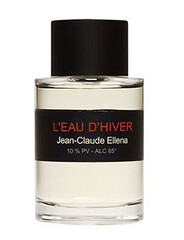 L'Eau d'Hiver, by Jean-Claude Ellena for Editions de Parfums
Despite all the floral notes (the clear freshness of water with the softness of white heliotrope, iris and honey), this scent is suprising crisp but warm. I first read about it here and was determined to get a sample. This was a gift and I love to wear it.
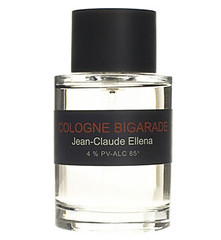
The same article mentions Cologne Bigarade, also by Ellena. For that reason and the description in the article of its scent being a strange but pleasurable, retina-expanding experience, like "like looking down into a well of cool, black water," it is intriguing.
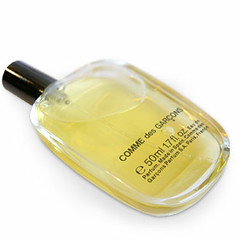 Eau de Parfum by Comme des Garcons
Beautiful packaging (like a droplet encapsulated in film, that typography, the assymetry) and a beautiful scent: abdanum, cedarwood, cardamom, cinnamon, black pepper, honey, clove, nutmeg, sandalwood, "... woody and resin work in concert with harmonies of honey and cedarwood. Full of softness and warmth…the complexity subsides."
I haven't worn this in a few years but I still remember the excitement of first discovering it and how much I loved it.

Avignon Eau de Toilette by Comme des Garcons Series 3: Incense
"Roman chamomile, cistus oil, elemi, incense, vanilla, patchouli, palisander, ambrette seeds, ... the scent of gothic cathedrals and Papal palaces, of tapestries imbued with centuries of incense. Of cold marble steps, holy relics and dark confessions."
Who wouldn't want to smell like a church? But then, oh yes, I like to burn this. In earnest, I would love to try this.
Herbs
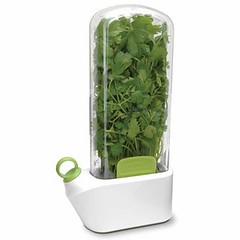
Prepara's Herb Savor
Great idea; not sure I entirely love the aesthetic. But it beats trying to pull this feat with a glass of water and a plastic bag! The DIY version always manages to tip over and make a boggy mess.
Monday, October 26, 2009

Saturday, October 24, 2009
Friday, October 23, 2009
Fools' Gold
 Pyrite, Manganocalcite, and Quartz.
 Picture bf Ebay Seller Rohowell
Make that pyrite.
 Pyrite Dot by Ball & Chain
Friday, October 16, 2009
Thursday, October 15, 2009
Encapsulated
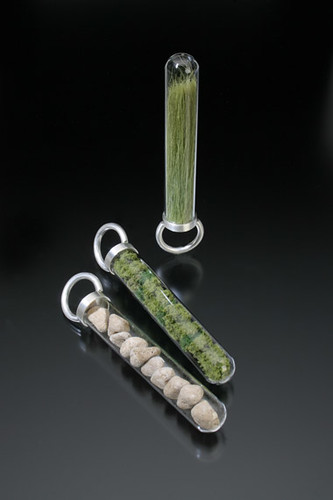 Images by Sarah Hood
Landscape and Spice Jewelry by Sarah Hood
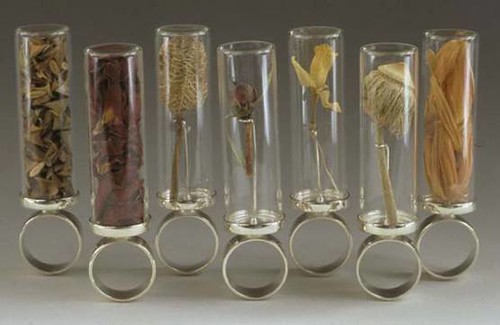
Images by Anika Smulovitz.
“Herbarium Specimen” by Anika Smulovitz.
Tuesday, October 13, 2009
Spherification
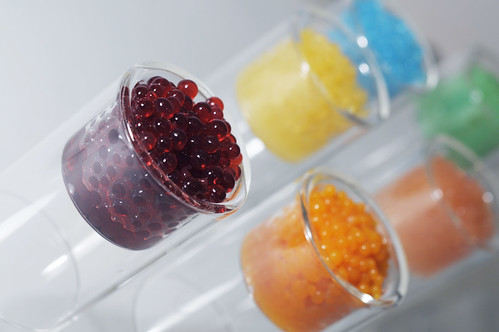 Image by Luxirare
Spheres in Parfaits by Luxirare
I must try this!
Shopping List:
Syringe(s) or. better yet, Dropper Box
Sodium Alginate here or here
Calcium Chloride here
Wednesday, October 7, 2009
Sunday, October 4, 2009

Subscribe to:
Posts (Atom)


 Posts
Posts